
Keep it Dry! Simple Steps to Reduce Moisture and Mold in Your Home
Mold can pop up when you least expect it. It often develops in areas you don’t check regularly and is not seen right away. Once visible, mold must be tackled head-on to prevent it from becoming a larger issue. While we won’t be discussing how to remediate mold in length, there are many ways to help prevent mold from forming in the first place.
So where is the moisture coming from? Well, according to Gus Handegord, a famous Canadian building scientist, "the three biggest problems in buildings are water, water, and water." This is mainly because water can enter the home through outside and inside sources. Most commonly, people will experience exterior water entering their homes through roofs, basements, cracks, gaps in windows, walls, doors, and improper drainage management.
Exterior Moisture
Improperly installed windows, roofs, and doors can allow water to penetrate into roof lines and wall cavities, causing structural damage and leaks. This can provide an environment where mold can grow and rot out areas of the home. For example, when a window or door is installed, it must be flashed, sealed, and caulked properly so that all penetration points are closed off. When shingling a roof, all areas where two planes of roofing meet must be flashed using galvanized steel, aluminum, or copper sheets. These sheets are laid where those planes meet to ensure no water can penetrate those seams. A common area where flashing is missed is where dormer window roof planes meet the rest of the roof, allowing moisture to enter between the connecting roof planes.
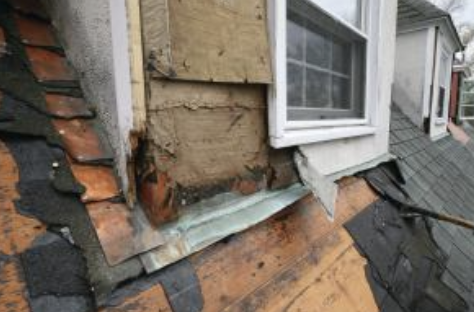
<- Damaged dormer window
This dormer has not been flashed and sealed properly; it is missing a weatherproof underlayment that would be placed underneath the metal flashing that aligns with the shingles of the roof. Because the underlayment is missing, water has entered into those seams and rotted the wood underneath.
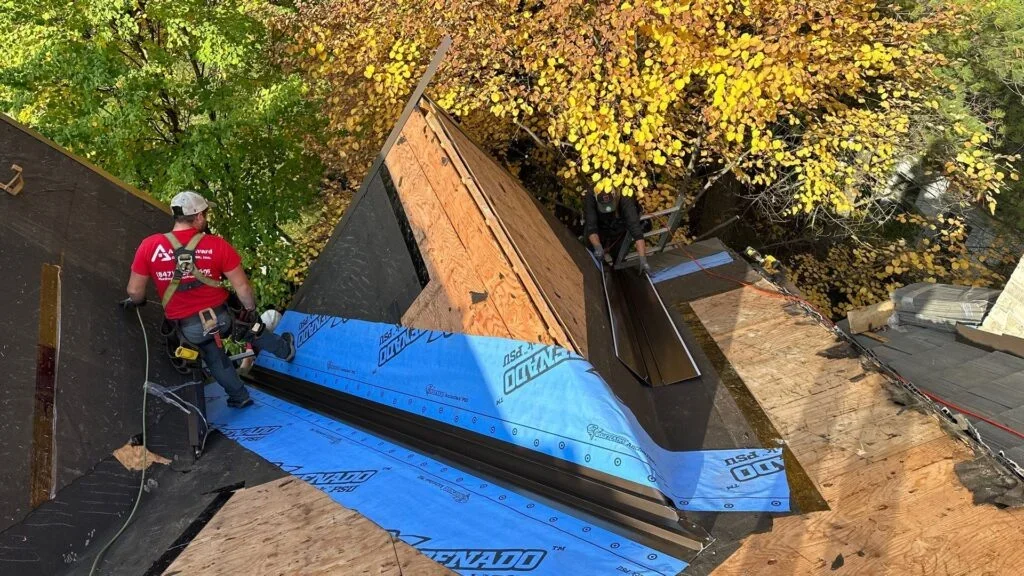
<- Roof Valley Flashing
In this example of roof valley flashing, the underlayment has been placed under and out from the adjoining flashing material helping create the weatherproofing needed to avoid moisture from entering where the two planes of the roof sheathing material under the shingles meet.
Drainage and the slope of the landscape around a home impacts how rain, groundwater, and melting snow finds its way into the interior through gaps, cracks, and openings. Gutters can make a big difference, but it comes down to proper maintenance – like cleaning them out semi-annually & ensuring there are no blocks in spouts. This is critical. The termination point of the gutter downspout should be at least six feet away from the home so that water is not redirected down into the foundation.
Drainage and the slope of the landscape around a home impacts how rain, groundwater, and melting snow finds its way into the interior through gaps, cracks, and openings. Gutters can make a big difference, but it comes down to proper maintenance – like cleaning them out semi-annually & ensuring there are no blocks in spouts. This is critical. The termination point of the gutter downspout should be at least six feet away from the home so that water is not redirected down into the foundation.
Other options include installing a French Drain around the perimeter of the house, or landscaping down and away from the home instead of directly down, but these can be more costly interventions.
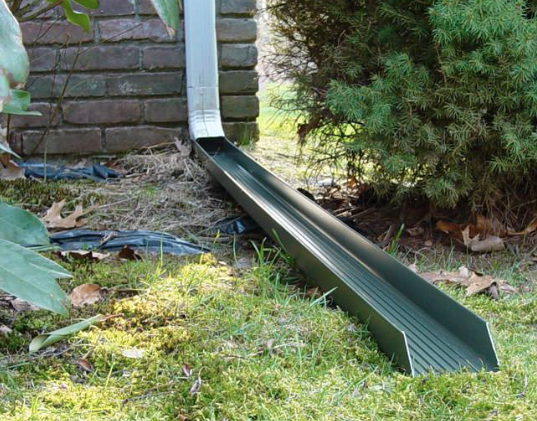
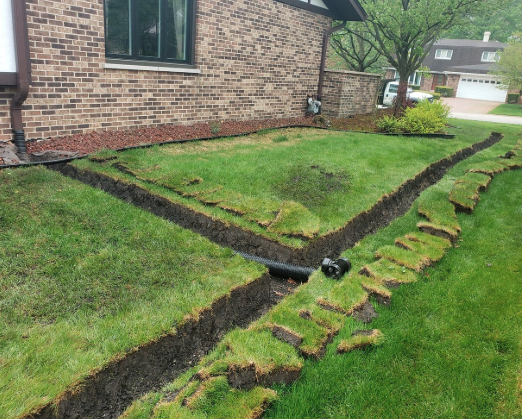
Above Images: (1) Downspout Extension (2) French Drain
There are three main types of foundations: slab-on-grade, crawlspaces, and basements. Slab-on-grade foundations are the cheapest option and are most often found in warm climates, but can be insulated in cooler climates to avoid issues. These types of homes generally use attic spaces or utility rooms to contain their utilities, plumbing, and water connections. Homeowners should ensure these spaces are properly insulated and check for leaks in their hot water and plumbing lines periodically to avoid water damage in their homes.
Homes with basements are areas where dampness and mold growth can often occur, whether that be through improper drainage of rain, through capillary action, or other avenues like basement window wells.
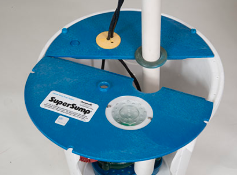
<- Sump Pump Cover
If your home has a sump pump to remove excess water, use a cover to prevent moisture from escaping back into the air.
If your home has a crawlspace, opt for encapsulation. Crawlspaces are a significant source of air filtration and can contribute to water vapor entering the indoor environment. Sealed, encapsulated, and insulated crawlspaces keep moisture from migrating into the home.
All homes, regardless of foundation type, can benefit from the use of a dehumidifier with an automatic setting, where it will turn on when the relative humidity reaches a set point, like 50%, is an easy way to set it and forget it when it comes to reducing the amount of moisture in that space. The optimal range of relative humidity in the home is between 30% - 60%.
INTERIOR MOISTURE
Ensuring exterior points of contact, where water could enter the home, are properly sealed off helps prevent moisture from entering the home and mold from growing. But this is only half of the solution to reducing moisture and mold growth in your home. There are also plenty of ways water and moisture can enter the home from the interior. Think about all the appliances that require water: your washer, fridge, sink, dishwasher, toilet, etc.! We also create moisture from everyday activities we do inside our home — from cooking and showering to laundry habits, steam and water vapor can accumulate quickly, settling on walls, ceilings, and other surfaces.
Steam can be a source of moisture in various areas of your home. In the kitchen, cooking on the stovetop can introduce steam and, therefore, moisture into the home. Cooking on the back burner and using the range hood that vents to the outside helps remove the steam created.
In the bathroom, showers are also a major source of internally generated moisture. Steam and water escaping from the shower can lead to moisture building on the walls and ceilings of the bathroom. Using a bathroom exhaust fan during your shower and running it for an additional 15-20 minutes afterwards can help reduce the accumulation of moisture in the home.
Washing and drying clothes can also add moisture to the home. Making sure your dryer vent is exiting to the outdoors greatly reduces the amount of moisture being reintroduced into the home. Another option is to dry your clothes on a line outside so that the water evaporates directly into the outside air.
These are common causes of moisture problems in the home and can lead to hidden or often unseen moldy areas. Keeping your home properly maintained and dry will help prevent moisture buildup and will ultimately not only keep your home safe and dry, but also help keep you and your family healthy and free from mold exposure. Periodically checking water lines and other sneaky leaky spots is excellent preventative care. There are also smart tools, like leak detector alarms, available on the market that notify homeowners of leaks and can be especially helpful for spots where it is hard to check often.
For more information about mold and mold remediation practices, the NYS Department of Health page on Mold and Your Home: What You Need to know is a great resource for homeowners looking to better understand how mold can occur and how to remediate it safely and effectively.