Getting Technical: Building Analyst - Technician Training
Six members of the North Country Clean Energy Hub team convened at the NYS Weatherization Directors Association (NYSWDA) energy efficiency training center in East Syracuse during the last week of March to complete the Building Analyst - Technician (BA-T) training. This is a hands-on program offered by the Building Performance Institute (BPI) and is the next step after successfully completing the Building Science Principles online course and exam. Hub members completed this training to enhance their expertise and ensure they can provide the highest level of support and service to the communities we serve.
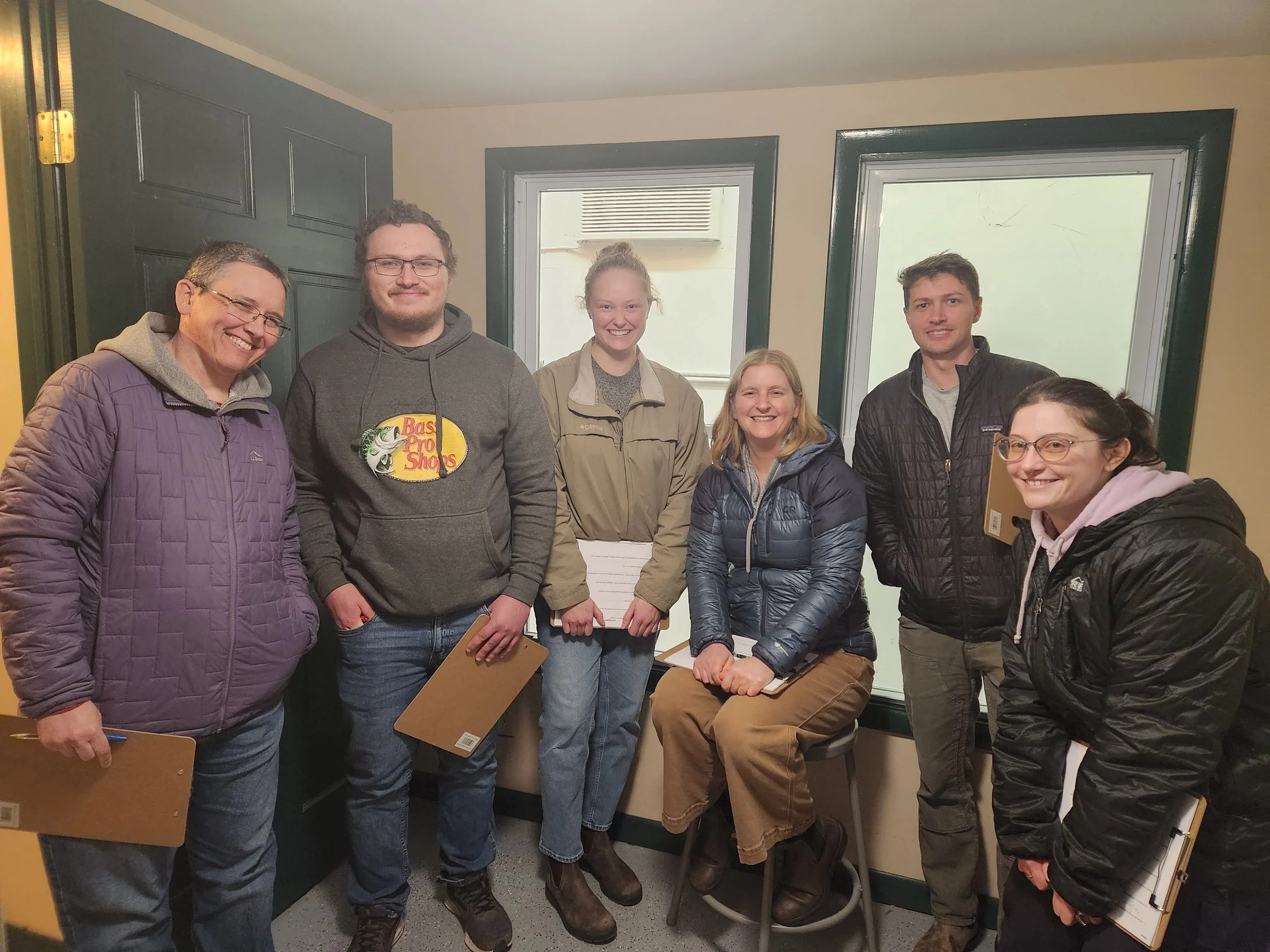
Throughout four full days of training, students spent time in the classroom and in two “pressure houses” learning how to identify various building systems, perform diagnostic testing, and understand the standard procedures for home assessments. Following their completion of the course, all six Hub members successfully passed the field examination and gained their certifications
DAY ONE: SAFETY + HOME HEALTH
Our first day of training was largely spent in the classroom.
Trainer & Program Liaison, Bob Braunlich, spent much of the morning reviewing key concepts from the Building Science Principles course, including photos and personal anecdotes from his time working in the field. Topics ranged from thermodynamics to common building styles to health and safety – all of which impact the energy efficiency of a home. In the afternoon, we were introduced to Pressure House 1 and applied concepts from the morning to a discussion about exterior building evaluations and interior safety evaluations.
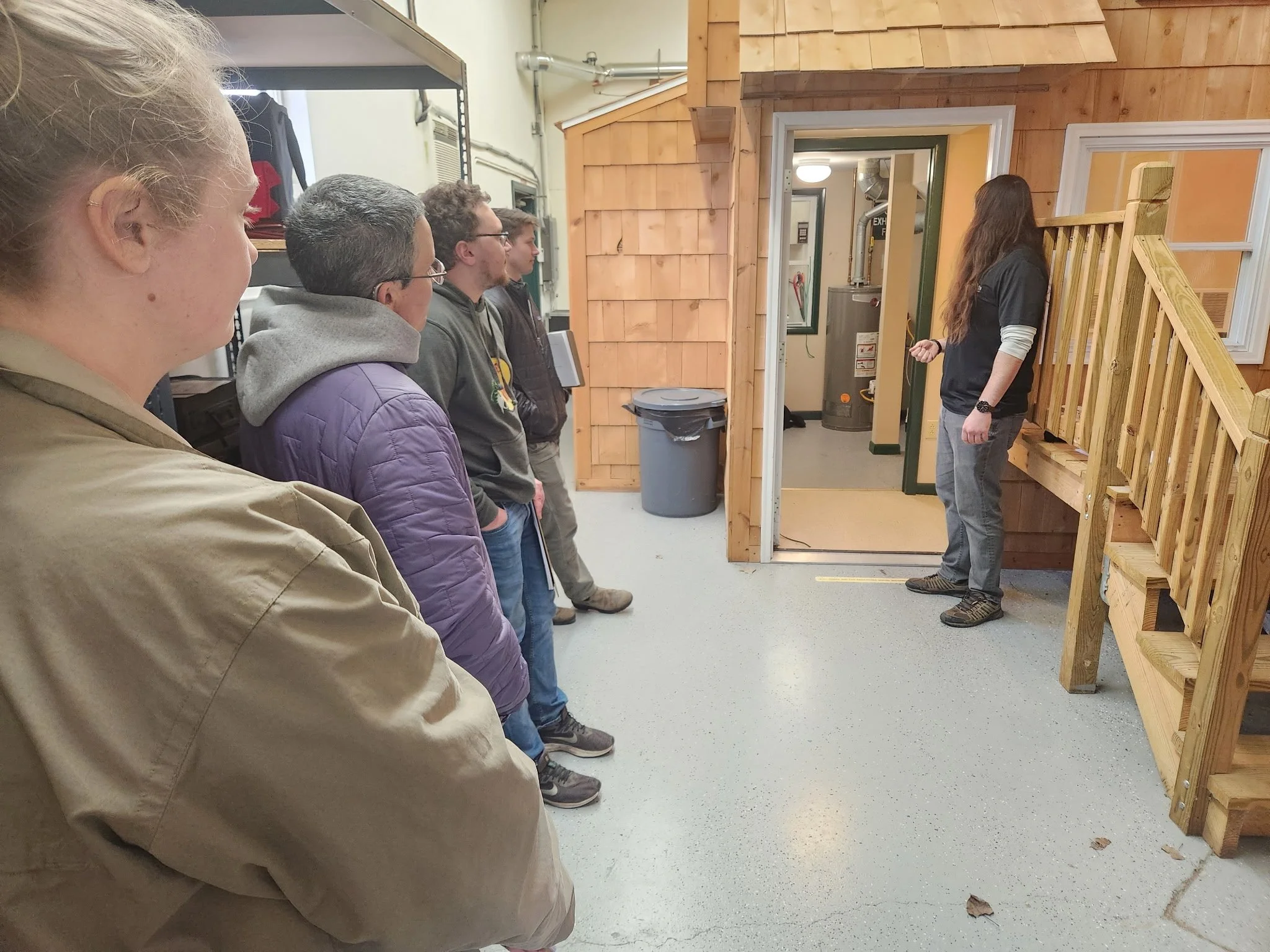
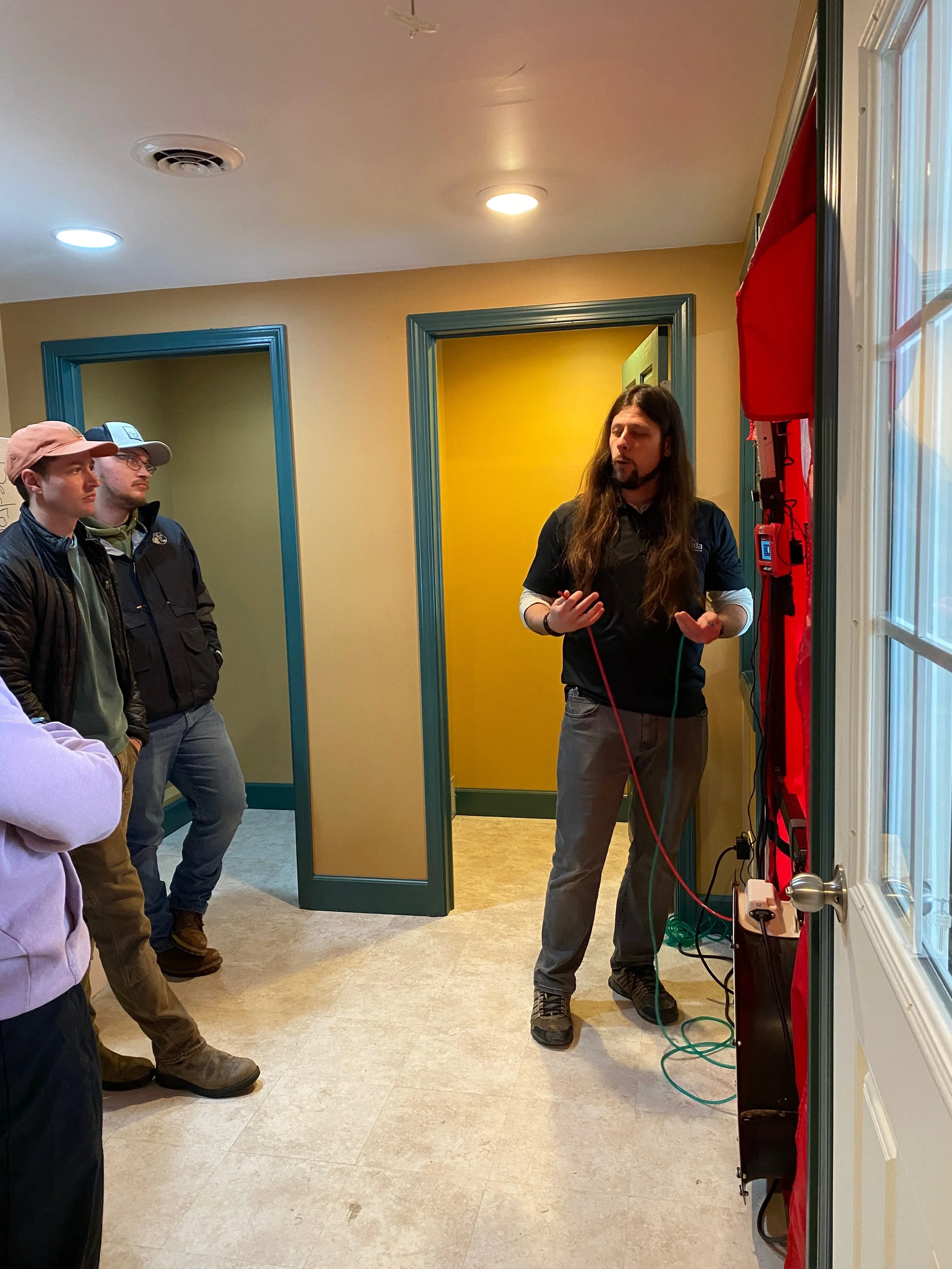
Trainer Bob showing Hub members how to evaluate an exterior door.
DAY TWO: HVAC + HOT WATER
On the second day of training, we did a deep dive into all things HVAC (heating, ventilation, and air conditioning) and domestic hot water. We spent much of the morning in a room full of example HVAC systems with varying fuel sources, ventilation, and operation types. In addition to basic identification and common concerns with different systems, we began to do more practice in the field with safety testing. The first test we learned was combustible gas leak testing, which we all got the chance to practice on the gas lines inside Pressure House 1. We also spent time discussing the importance of ventilation sources throughout the house and testing the flow rates of exhaust ventilation fans.
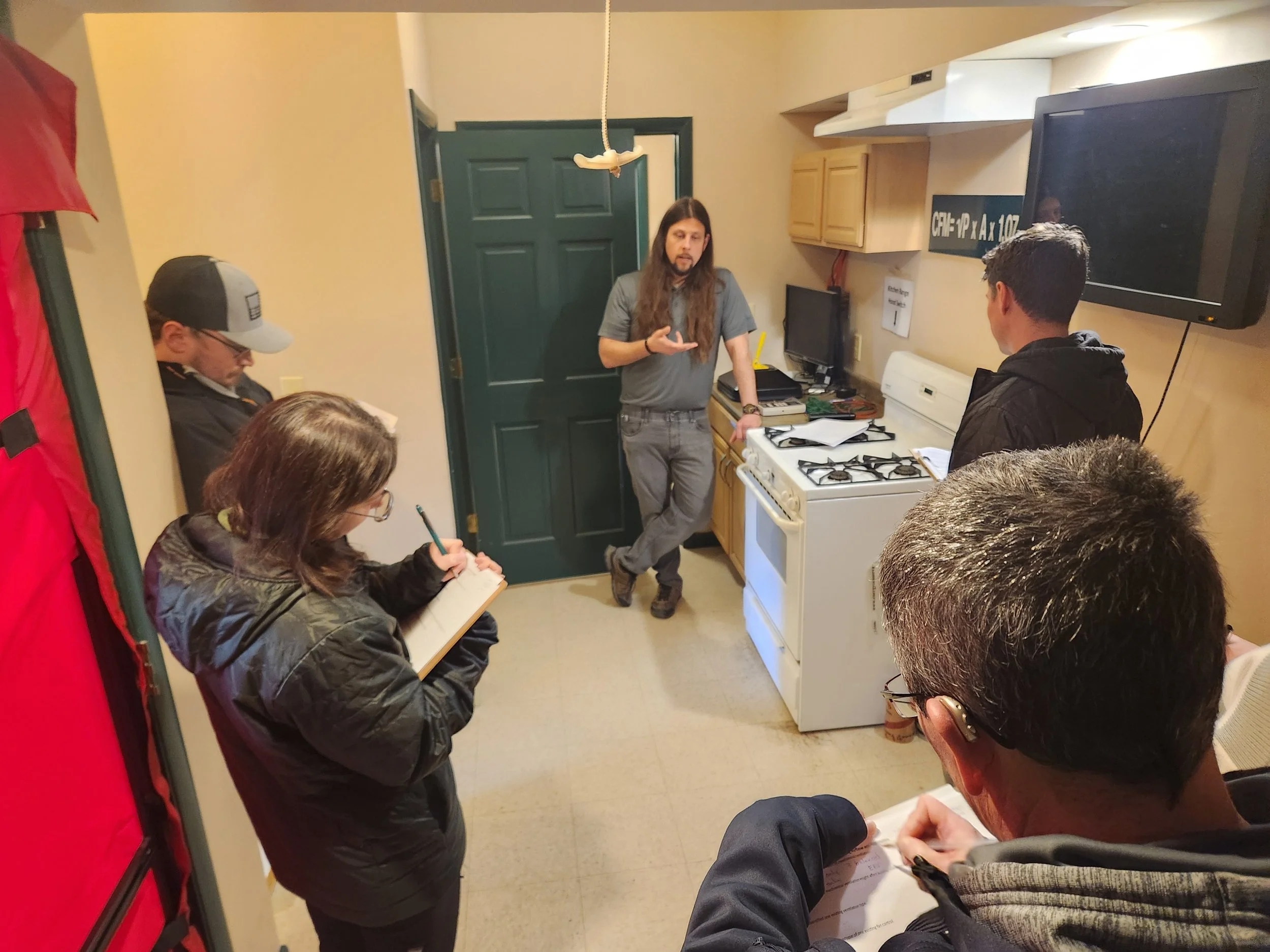
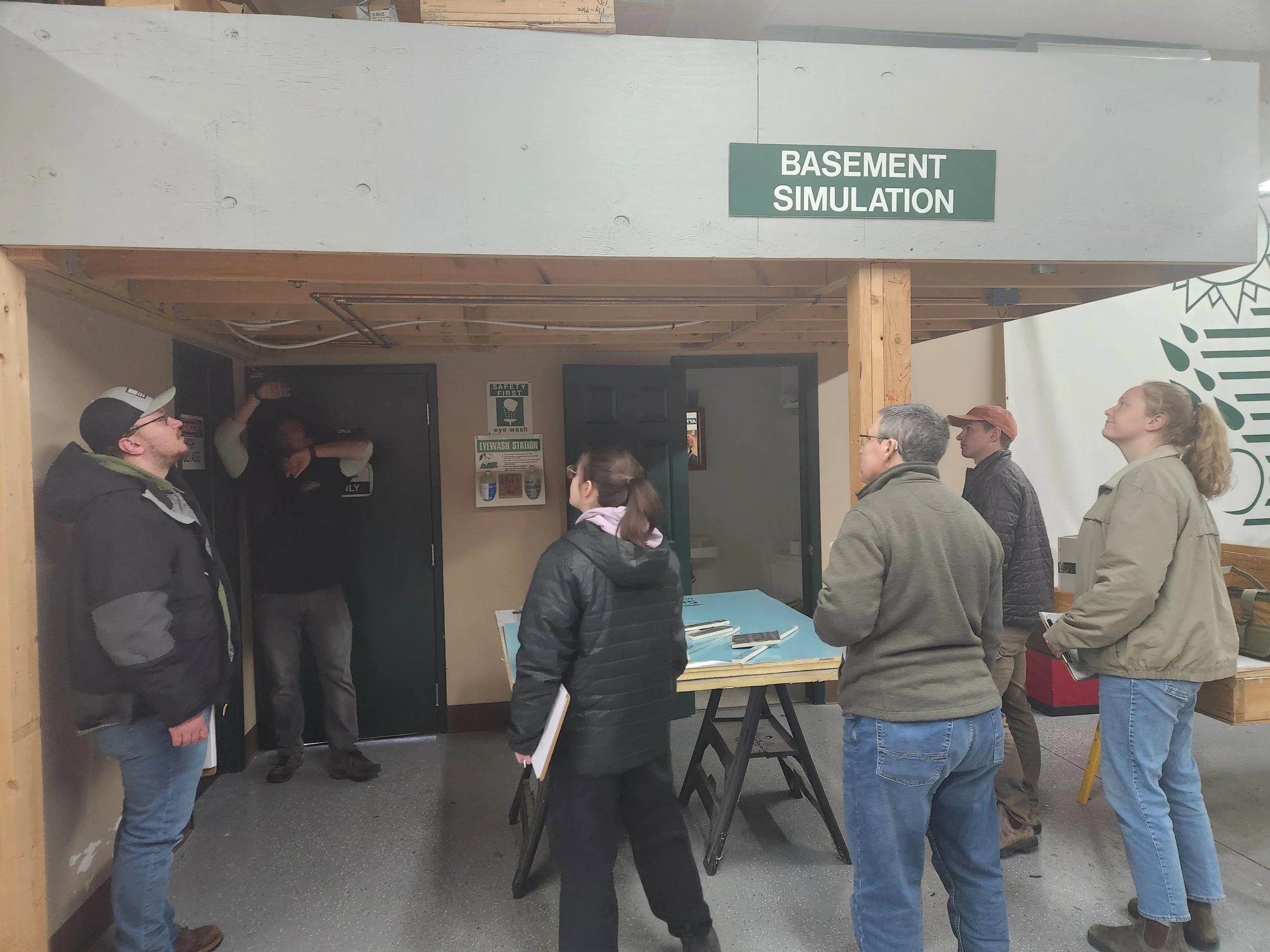
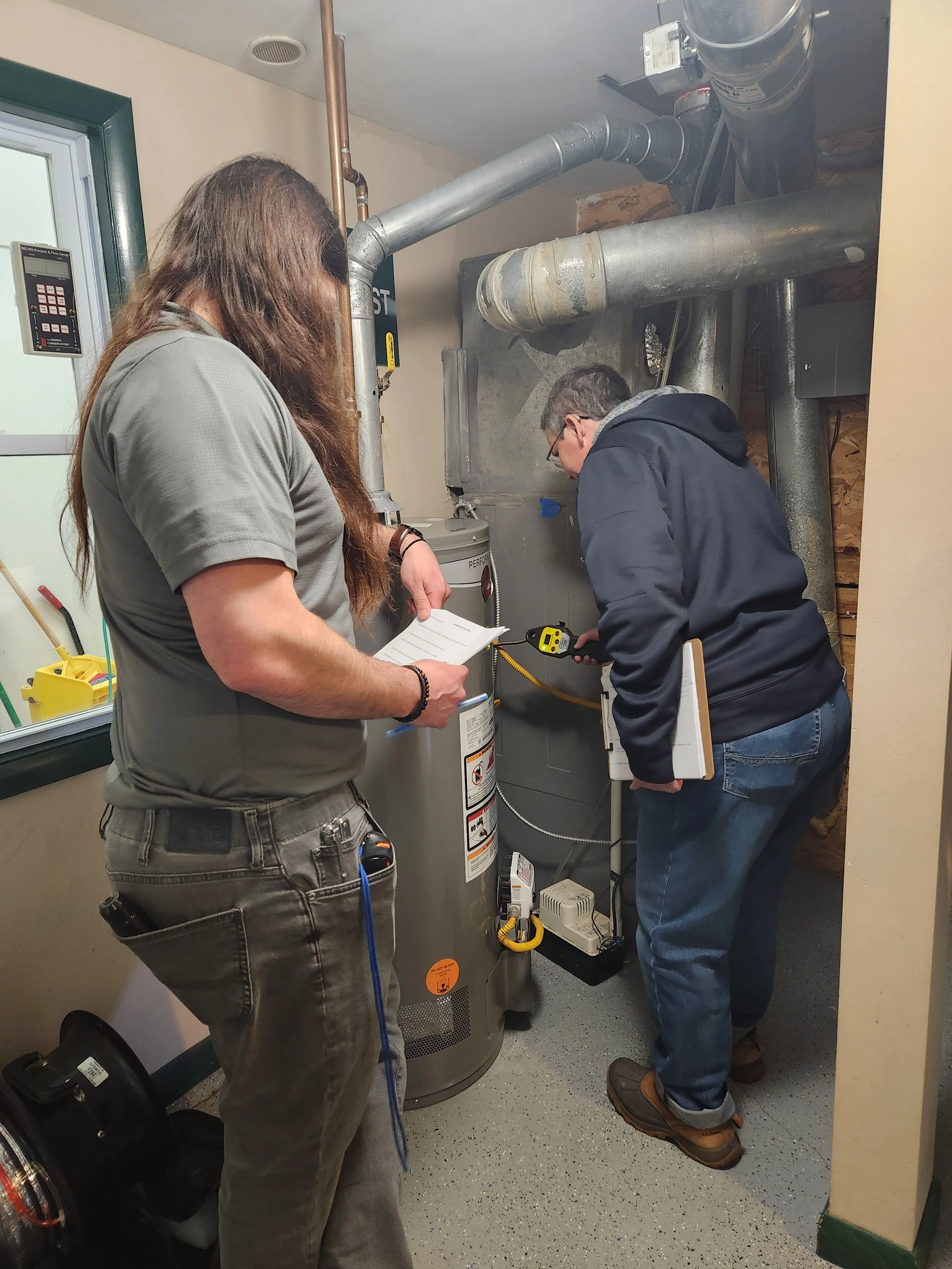
(left to right) Hub team learning about building airflow and ventilation in the kitchen of Pressure House 1, home health in a basement, Nick Hamilton-Honey testing gas line for leaks, and Carson Schweinsberg setting up blower door.
DAY THREE: BLOWER DOOR TESTING
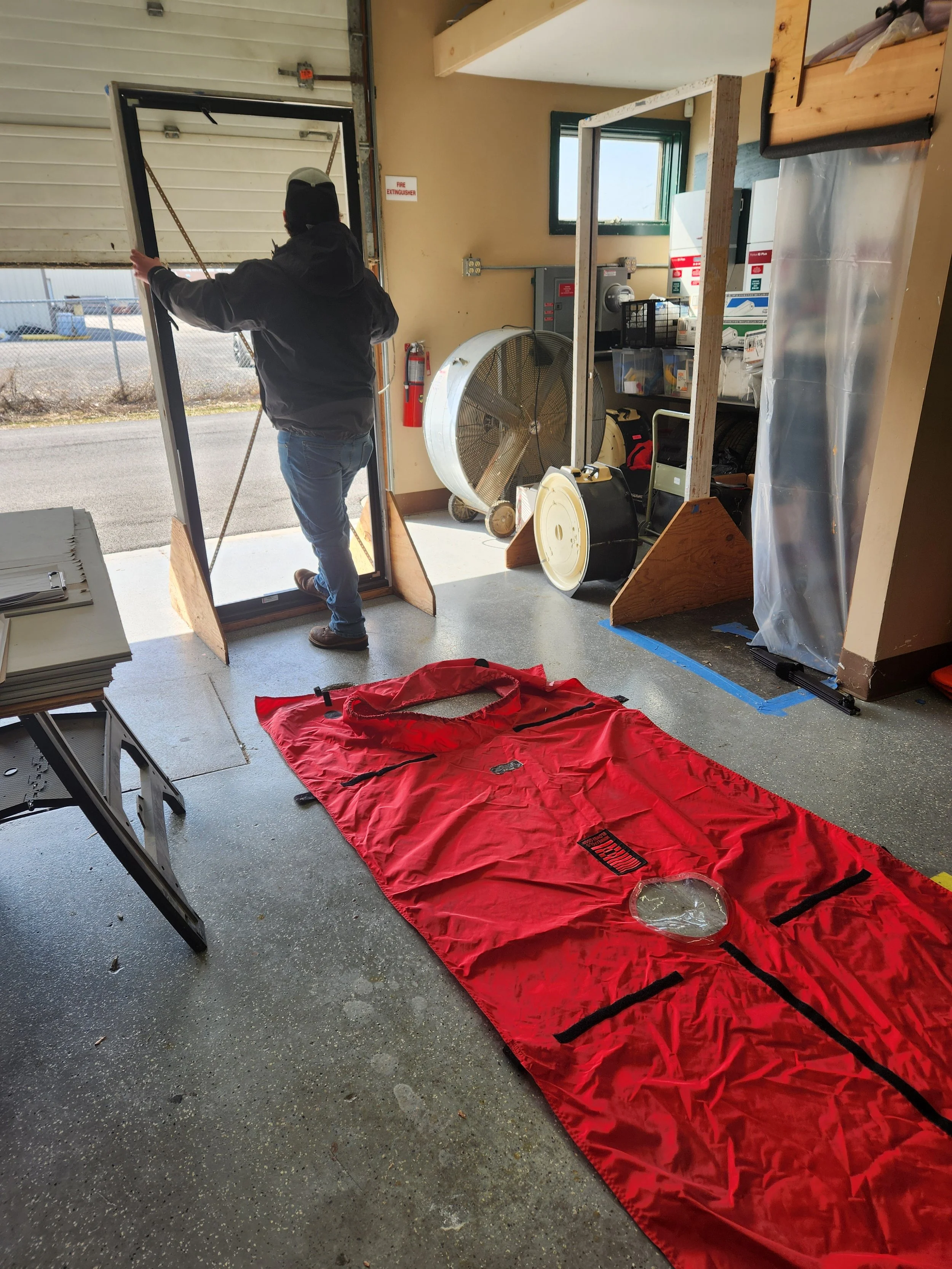
The third day of training introduced us to the second building where Pressure House 2 is located. We spent the morning learning how to assemble a blower door, which is used to depressurize a home and reveal areas of hidden air leakage throughout the building envelope. This process proved to be more challenging than we anticipated, especially for some of our shorter Hub members!
Once our setups were complete, we moved inside the test house to practice operating the blower door test and finding culprits of air leakage in the home. All of our team members got the chance to run through the steps of properly preparing the house, starting the fan, and feeling for airflow around penetrations that indicated a source of air infiltration. Carson Schweinsberg, Energy Advisor for Hamilton, Jefferson, and Lewis Counties, shared that learning how to operate the blower door was his favorite part of the training. This is a test typically performed by building auditors, so it was exciting to learn how to run through the process and better understand what to look for while the house is depressurized.
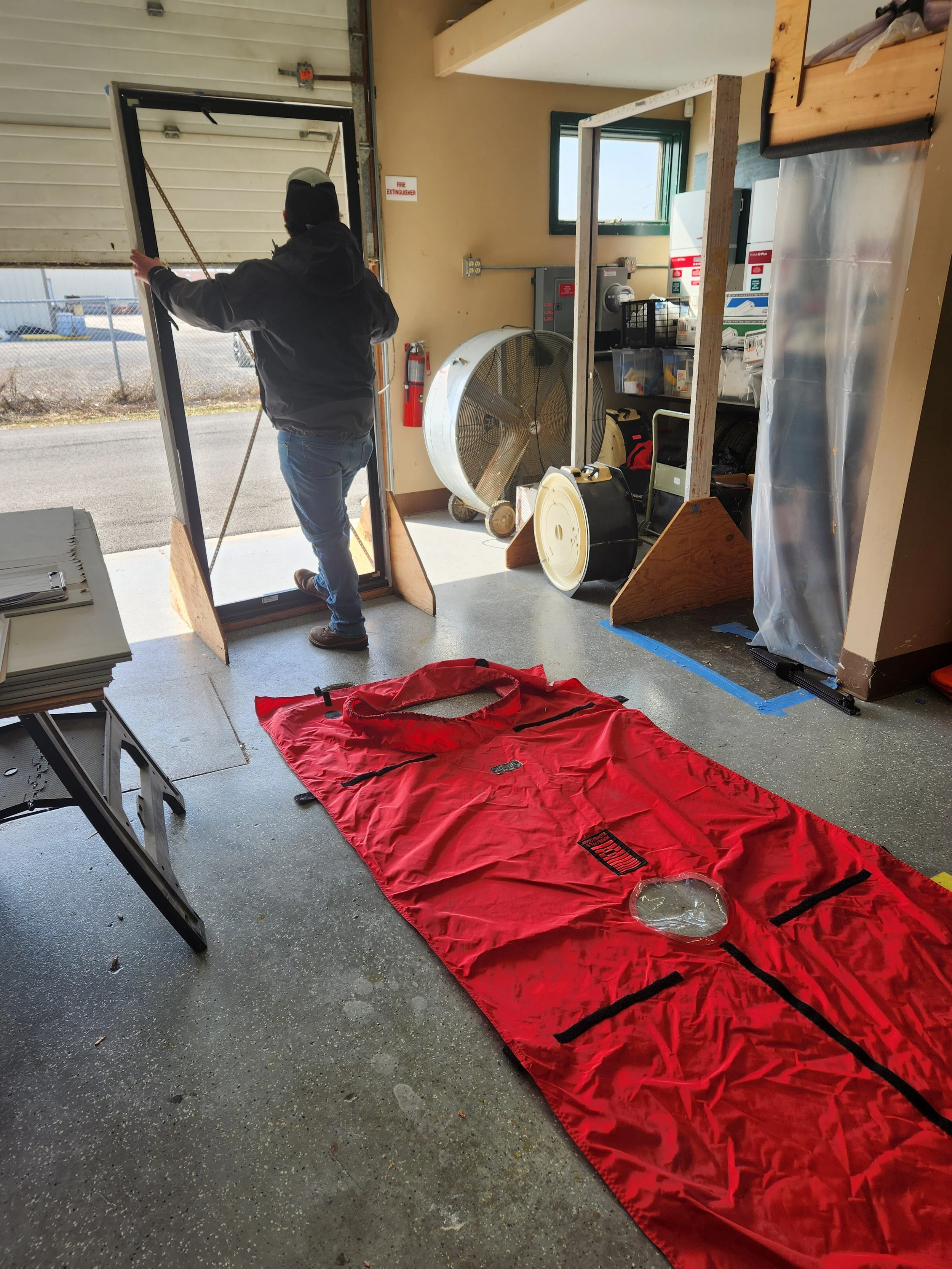
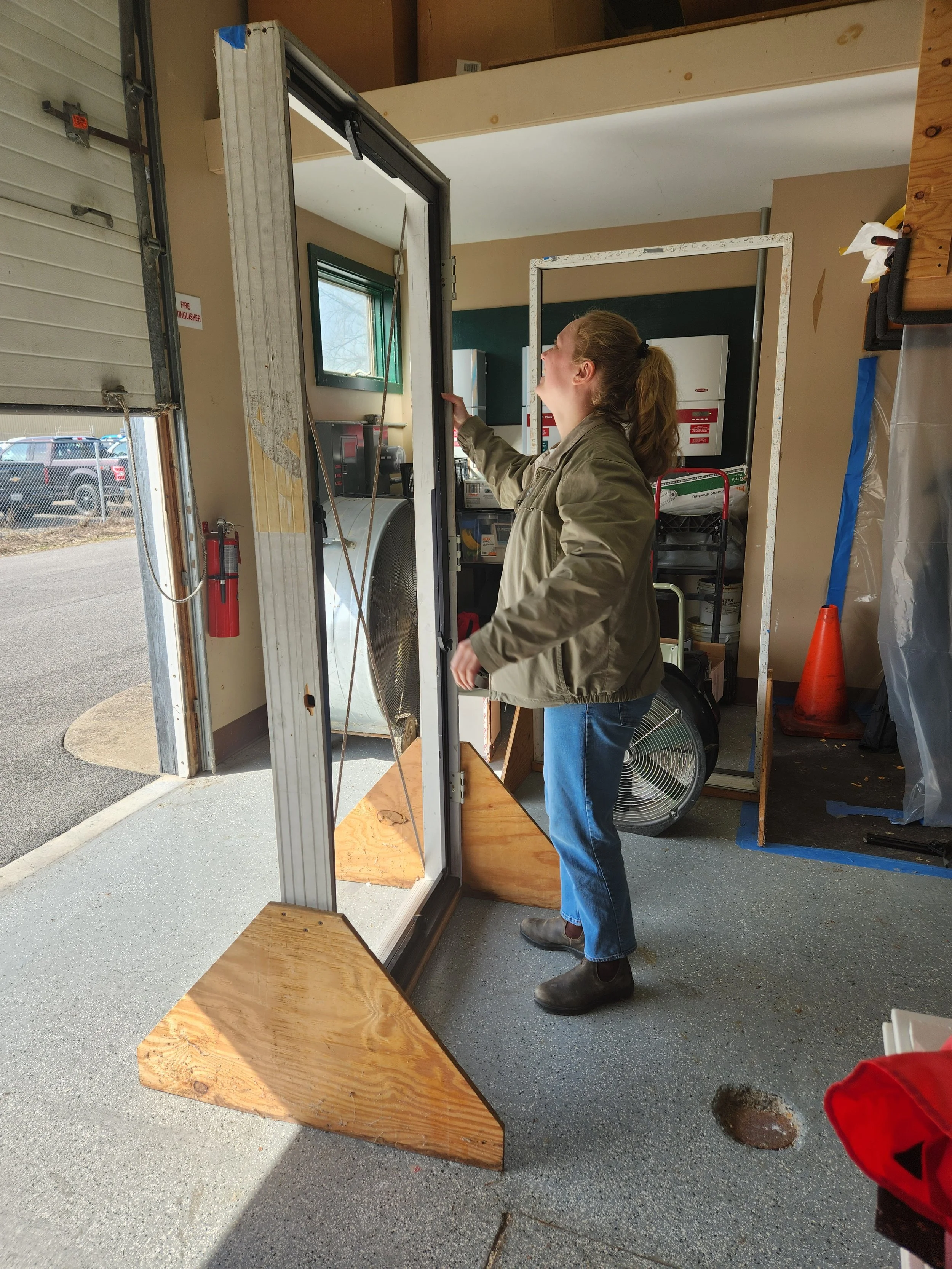
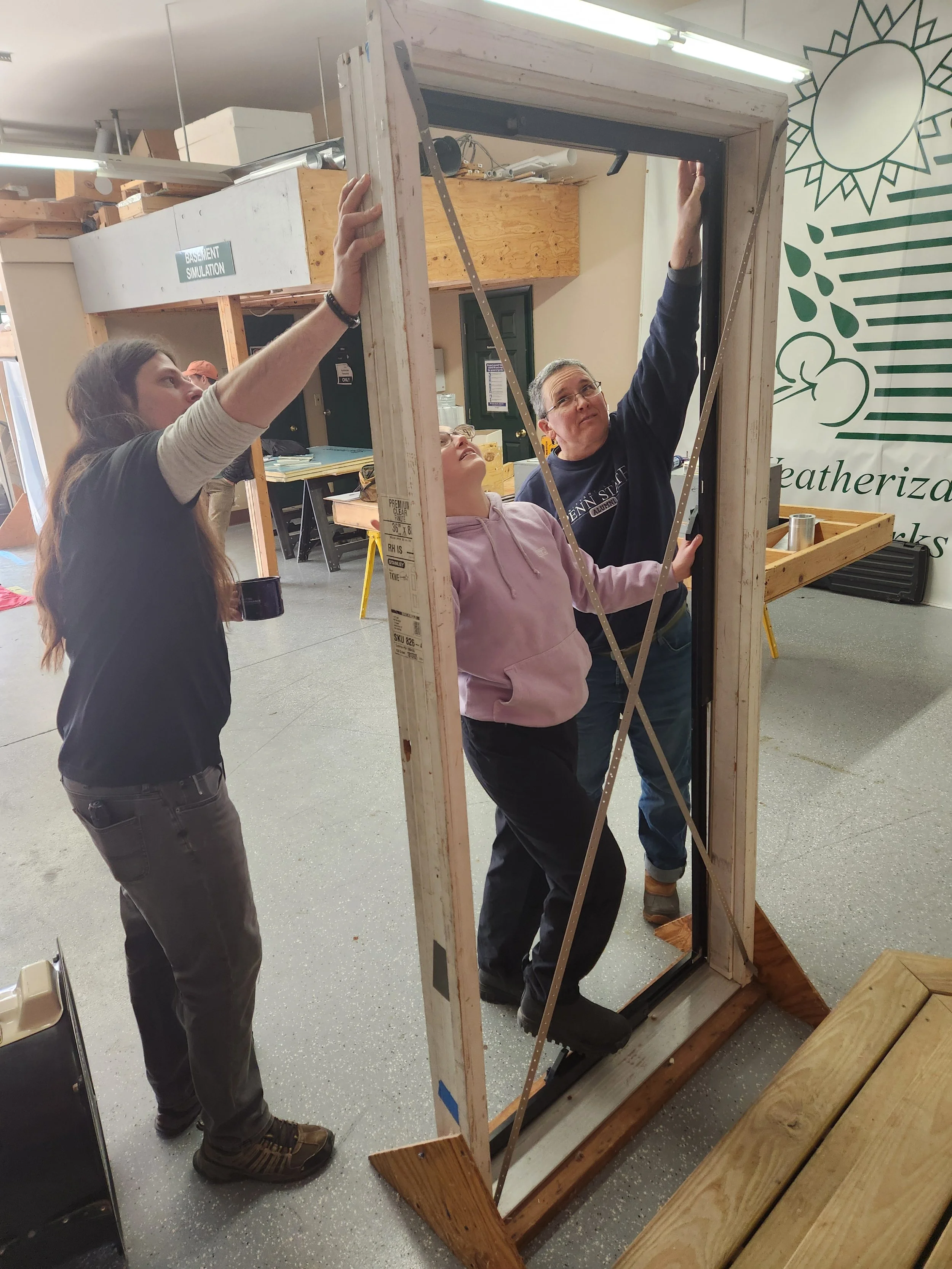
Hub team practicing assembly of blower door test and how to operate the fan.
DAY FOUR: COMBUSTION
The fourth and final day of the BA-T training was primarily a chance for our team to practice the tests that we would be completing on the field examination. We spent a lot of time reviewing and practicing the proper steps for combustion safety testing in the combustion appliance zone (CAZ) where the natural gas furnace, hot water heater, and clothes dryer were located. This testing involved preparing the home and finding the conditions that achieved the greatest depressurization reading in the CAZ. We then checked the gas appliances, specifically the hot water heater, for spillage and carbon monoxide levels to ensure that there were no major health and safety concerns. Nick Hamilton-Honey, Energy Navigator Volunteer Coordinator, said that their greatest takeaway from the training was learning about “the CAZ and the safety aspects for my Energy Navigator Volunteers when they do home energy walkthroughs.” Many Hub members who undertook the training agreed that home health and safety concerns were an important consideration that should be further built into our walkthrough protocol.
After four intensive days of training, our Hub members returned to the training facility in East Syracuse individually to complete their field examinations. All trainees successfully passed and officially received their BA-T certifications, which has greatly impacted their work and perspectives in the field. Nick Hamilton-Honey said that they “definitely don’t look at a house or apartment the same way since taking the BA-T training.” Clean Energy Hub Program Coordinator Bella Abbadessa shared that she now “feels more empowered visiting people’s homes and providing them with insight on how to address their energy efficiency needs.”
Hub staff also expressed gratitude and admiration for their trainer, Bob, who was helpful and patient throughout the training. The hands-on nature of the course generated in-depth discussions that a typical classroom experience would not have allowed for. Overall, the skills and knowledge gained from this training have had an incredibly positive impact on the North Country Hub’s understanding of building science and comfort in the field. The team looks forward to continuing to build on this experience and better support the residents and businesses they work with.
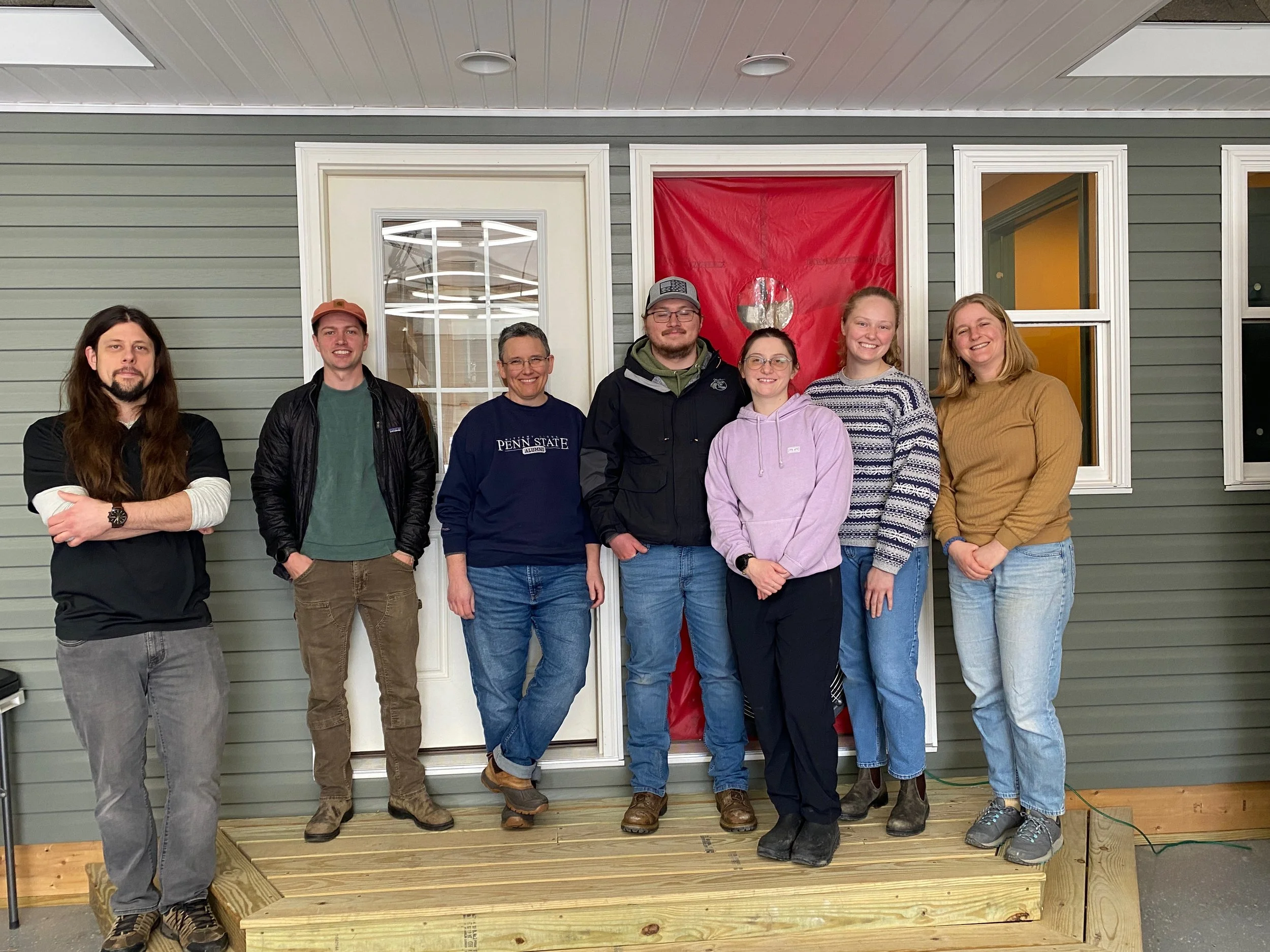
Trainer Bob (left) with the North Country Hub team in front of Pressure House 2