Are Solar Panels Worth it?
The big questions homeowners are asking: “Is going solar a good option for my home? Will it pay itself off? Will it save me money?” These are reasonable questions to ask when considering solar. This article will touch on what makes a home suitable for solar, how much solar panels generally cost, whether you will save money by installing solar, and what financial help is available.
YOUR HOME
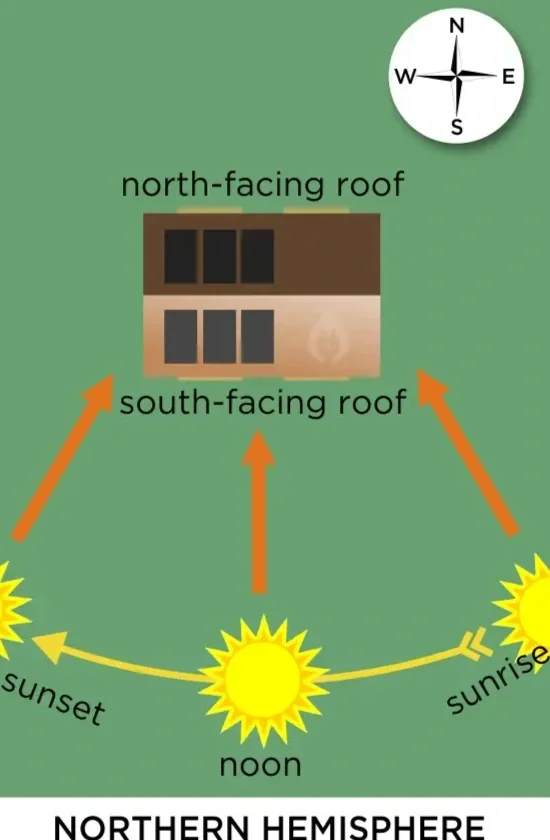
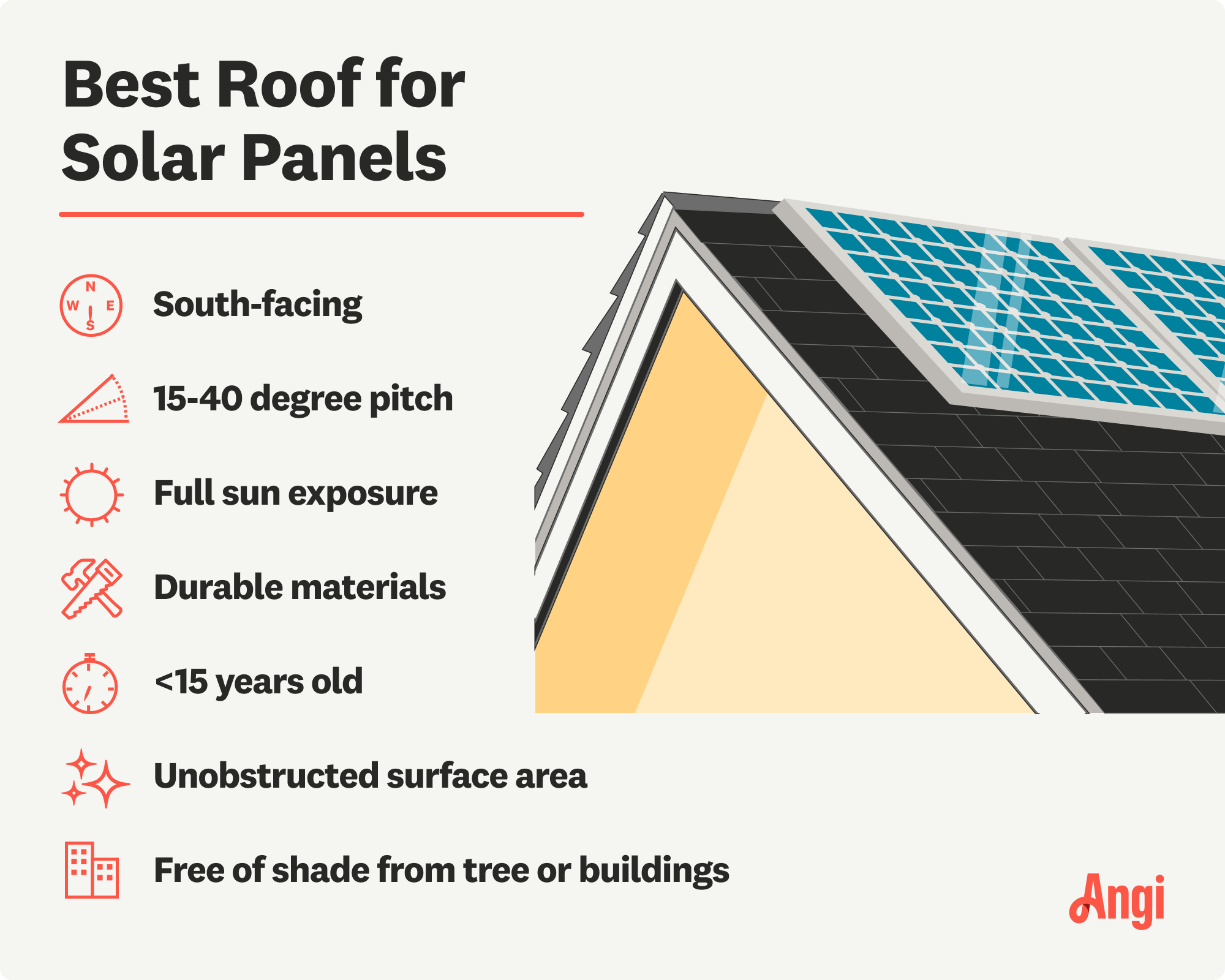
The first step when considering solar is to determine if your home is suitable. Some considerations when putting solar on your roof are its size, shape, and slope. South-facing roofs (see image right) tend to be best for maximizing how much energy solar panels can generate because of how the sun moves across the sky. Roofs that have a slope of 10 to 40 degrees tend to be optimal (Department of Energy). Other considerations to keep in mind are the age, tree shade, and condition of your roof. Before installing, a contractor should inspect your roof to see if solar makes sense for your space. An alternative to roof solar is “ground mount solar.” This means if you have the space in your yard, you can place them there! Your contractor can help you with local permits to install.
Many homeowners wonder if putting solar on their roof will damage it, and if the panels will be hard to maintain. The most common concerns are water damage, roof strain, and snow buildup. When solar is installed, contractors should be using the appropriate measures to properly seal and flash your roof to prevent leakage. Older roofs should be carefully inspected before having panels put on since some older roofs are not sufficient to hold up the weight and should not have solar panels installed on them. In the wintertime, when there is snow buildup, you can use a snow rake to get the snow off the panels. Due to the panels having a slick surface, this should be generally easy. Some panels even have a melting feature. The next step after determining if solar is a good option is to determine the cost.
PURCHASING SOLAR FOR YOUR HOME
The cost of your solar project will largely depend on the size of the project. For the average home in New York, installing solar usually costs $11,900 to $16,100 before incentives for a 5kW system (Home Depot). A 5kW system can cover most of a typical household’s energy needs; however, higher-drawing appliances might require additional kW. It is best to contact a licensed solar contractor to get a quote and to have the solar project appropriately sized for the home.
Individuals who are looking to own their own solar system should take advantage of the existing financial opportunities for solar. One financial opportunity that helps New York State homeowners with putting solar on their homes is the NYS Solar Tax Credit. This tax credit covers 25% of the solar project materials and costs and is limited to $5,000.
*Leasing Solar for Your Home: Leasing solar for your home is also a viable option. A 5kw installation could also be leased for between $50 and $250 a month based on various factors, with the lease being from 20 to 25 years.
SAVINGS FROM SOLAR
Can you save money by installing solar power? The answer is yes; however, how much you save will determine how big a system you have and if you decide to buy or lease the solar panels. Your savings will also depend on the electricity rates and how much the utility company is going to give you for putting electricity back into the grid (Department of Energy). This means that your financial returns will depend heavily on electricity rates; higher retail rates mean your power will be worth more. So you can expect your solar system to pay itself, but it can take a few years. A helpful tool for homeowners to determine savings is the calculator on the EnergySage website, which gives homeowners a rough estimate of solar panel savings for their area. Additionally, by putting solar on your home, you also increase the property value.
Adding a solar system to a property has been found to increase the value by 4% on average (NYSERDA). You can also apply to have this added value be tax-exempt so you don’t have to pay additional property taxes as a result. If you are looking for or are interested in installing solar, you can contact your local Energy Advisor to learn more about opportunities.